Intrahistorias
Javier López & Fer Frances Gallery. Madrid, Spain. 2019.
Throughout his life, the late Spanish Basque writer Miguel de Unamuno published works that proposed that the subtle happenings that shape our day-to-day are imbued with the deepest truths of history. The past that is agreed upon, he argued, is an index of consolidated events deemed worthy of remembrance by those privileged with power. Whether it’s the tide-turning battle of an epic war or a groundbreaking human rights advancement that makes the world more just, what we recall are snapshots that leave in the shadows thousands of small acts that tangibly shape how we exist. History happens in those intimate moments— when a student sets up her tent in Puerta del Sol, or a voter in Mexico casts their ballot in a consequential election, or a bartender in the Bronx, NY, decides to run for Congress. It’s these gestures, most often unseen, that make the historical real. Unamuno called this intrahistoria—all that which makes what we come to know as possible.
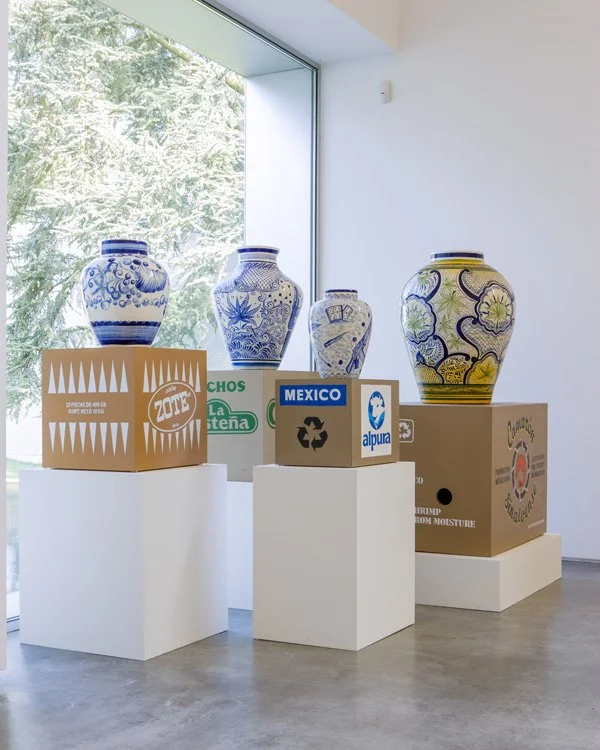
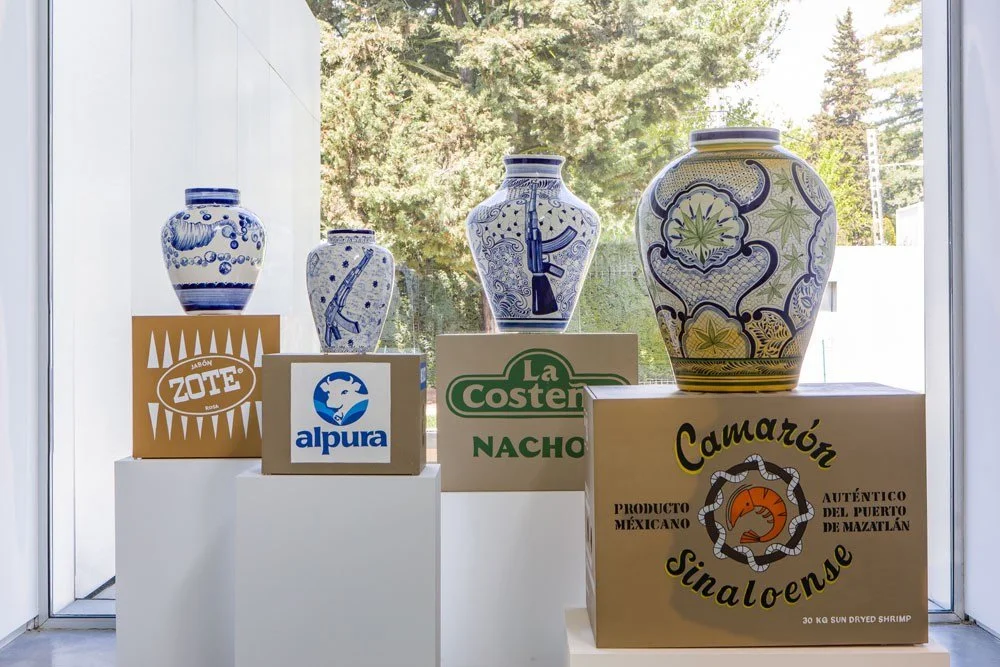
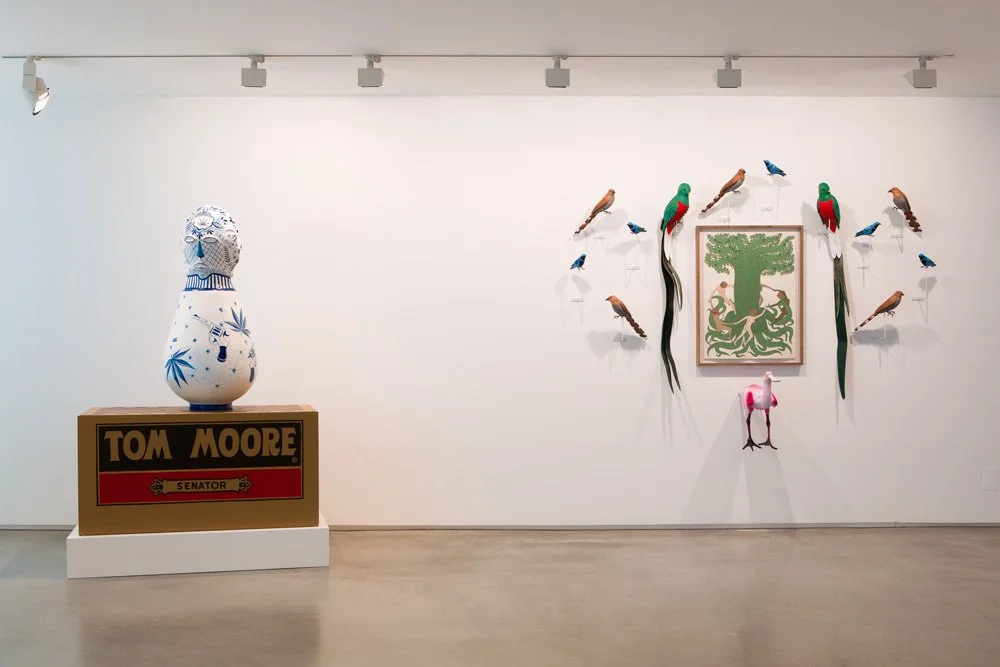
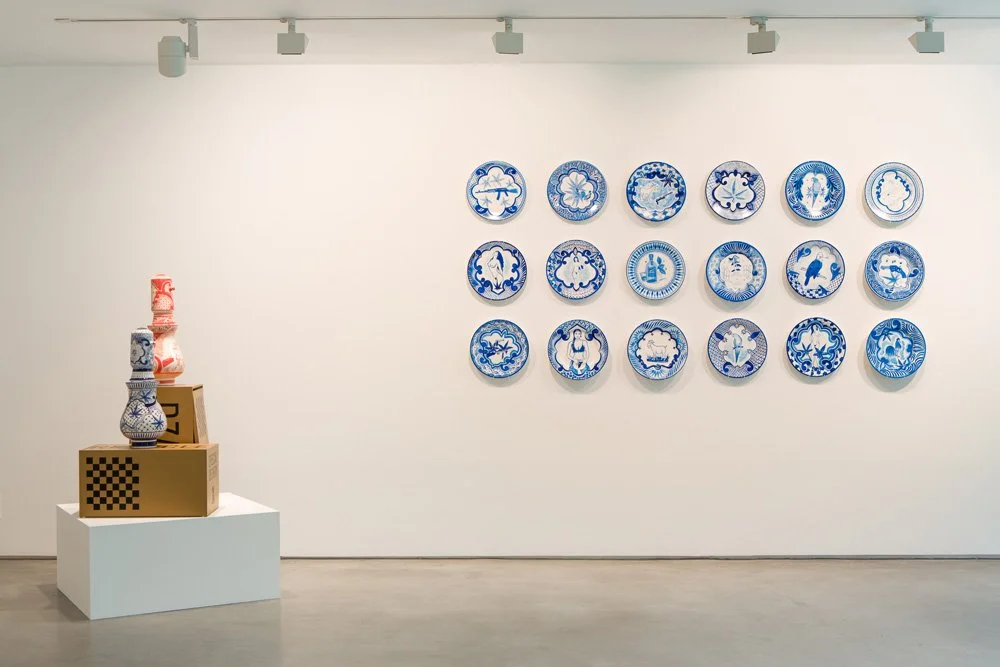
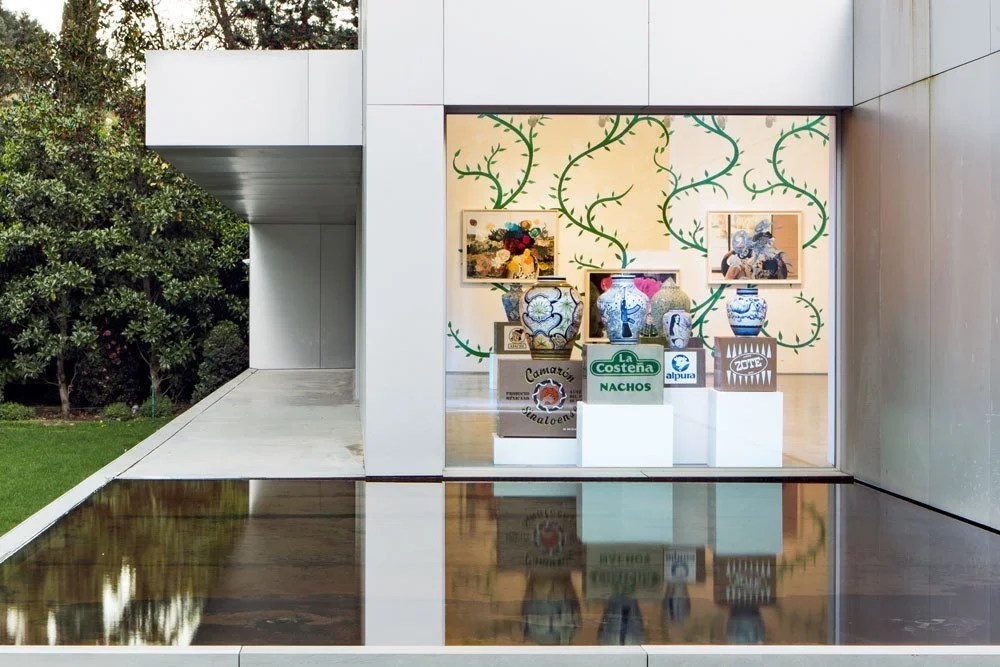
For over two decades Eduardo Sarabia has been committed to this intrahistoria in his own way. Through a practice that is pseudo-ethnographic in nature, he seeks out lesser-known stories in hope of showing us what they tell us about the way the world works. From collaborating with Mayan shamans to expand how to conceive the end of the world, to working with tequila makers in Jalisco to highlight how the history of this spirit is tied to the broader development of the region, to searching for the long lost treasure of Pancho Villa using only the myths of those who came before him, Sarabia is a faithful chronicler of Unamuno’s intrahistoria. He shares these narratives with us, his audience, through drawings, paintings, sculptures, installations, and videos—transforming them from soft echoes to resounding visual representations—and therein lies the central paradox of his practice.
Works of art inherently have a representational function. They are, to an extent, documents; forms forged from thoughts their makers want to convey. When the drawing is hung on the wall and placed across from the sculpture on a pedestal, ideas coalesce and just like the snapshots of a sanctioned history, they are given the authority to tell us something someone deemed worthy of us knowing. Sarabia is aware of this contradiction—of the inevitable way his works function once they enter into visual economies of display.
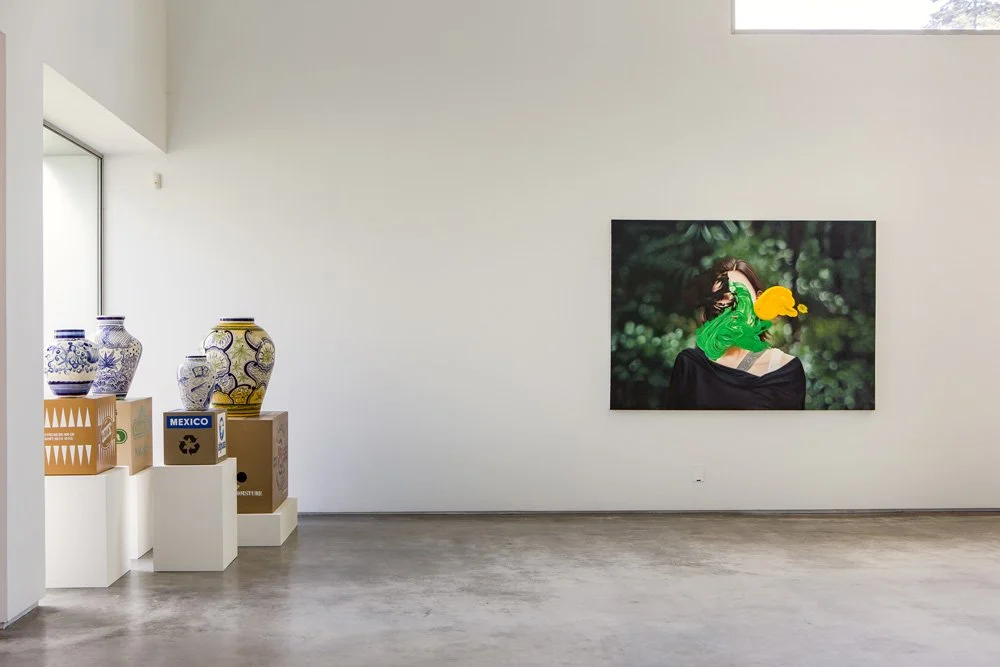
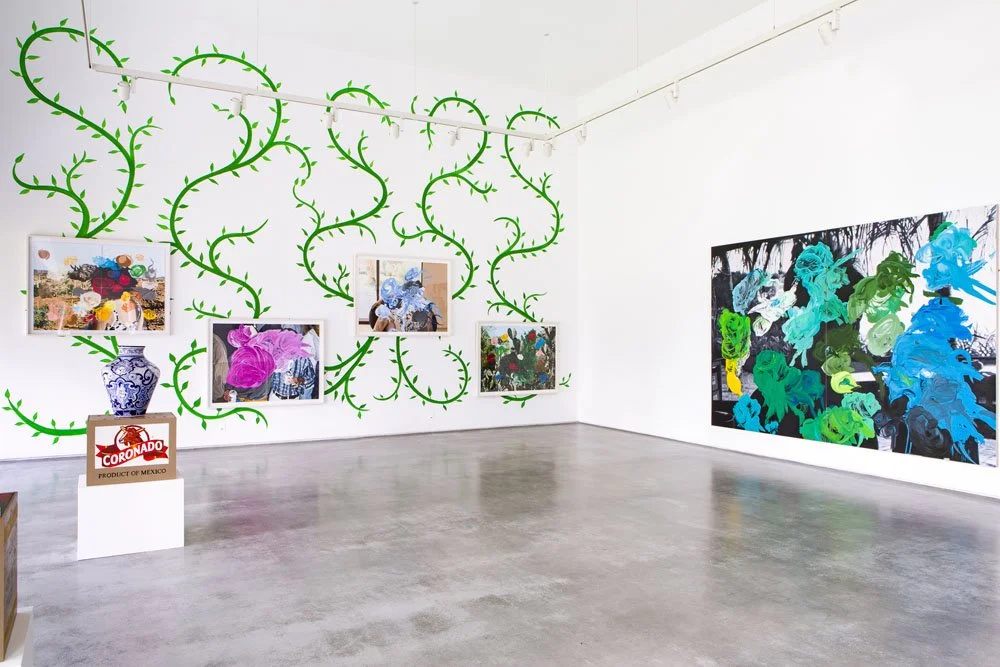
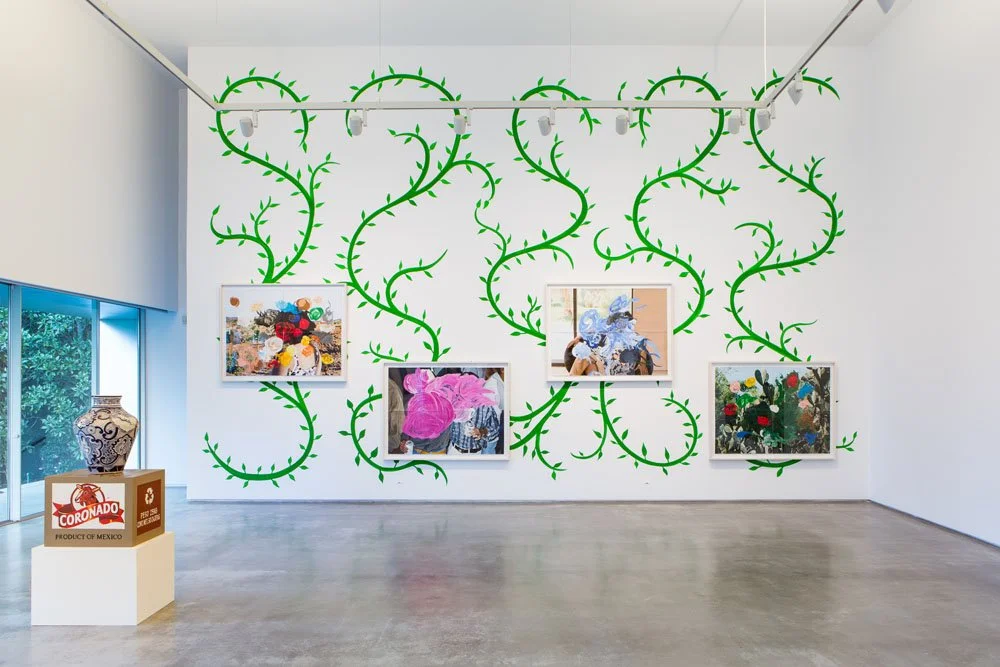
Ten years ago, after digitizing personal photos of friends and family and of past gatherings and vacations, Sarabia decided to keep the physical photos in his studio rather than discard them. He repurposed them and began to use them as scratch paper to mix colors while he drew or painted and to practice his strokes before he took the brush to canvas. What remained after there was almost no room on their surfaces were thick bursts of colors shaped into circular blobs by varying painterly gestures. Functional more so than intentionally improvisational, the compositions covered portraits and landscapes with messy experiments similar to the sloppy notes in a writer’s journal that come before they pen their essays. They were bits of ideas, incomplete thoughts—attempts to achieve something. In the small areas that were not covered, you could see glimpses of locks of hair, tree branches, tips of mountaintops, and snippets of bright colors from garments. Despite their erasure, you were made aware that behind these blotches were images that someone behind a lens had captured.
Hundreds of these small photos piled up in Sarabia’s studio over time and became the perfect metaphor for the central tension of his practice. The color bursts, lines, and shapes functioned like the lesser seen and heard stories he’s so invested in—the things that inspire his projects. The sketches and scribbles are thickly at the forefront here, pressed against the resolved image now made unresolved. This relationship between the completed picture and what precedes it coalesce perfectly in he 5 x 7” plane—giving us that central contradiction of Sarabia’s work in a formal object. Sarabia began to take these photos as a point of departure to make a new kind of artwork that was neither finished nor incomplete. The compositions, collectively make up an ongoing conceptual project that buttresses the frictions that guide his practice.
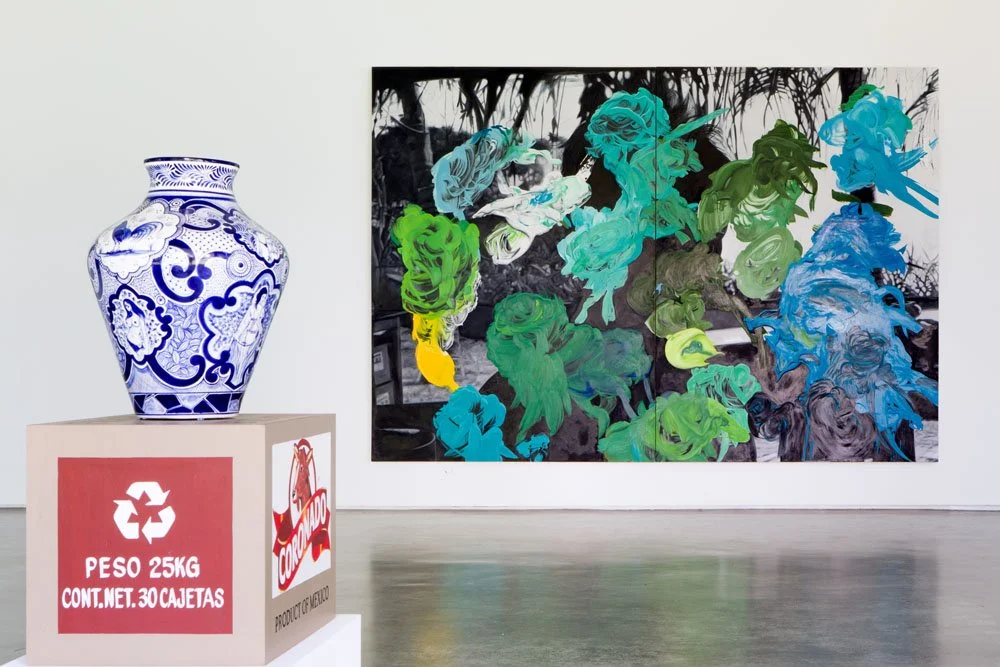
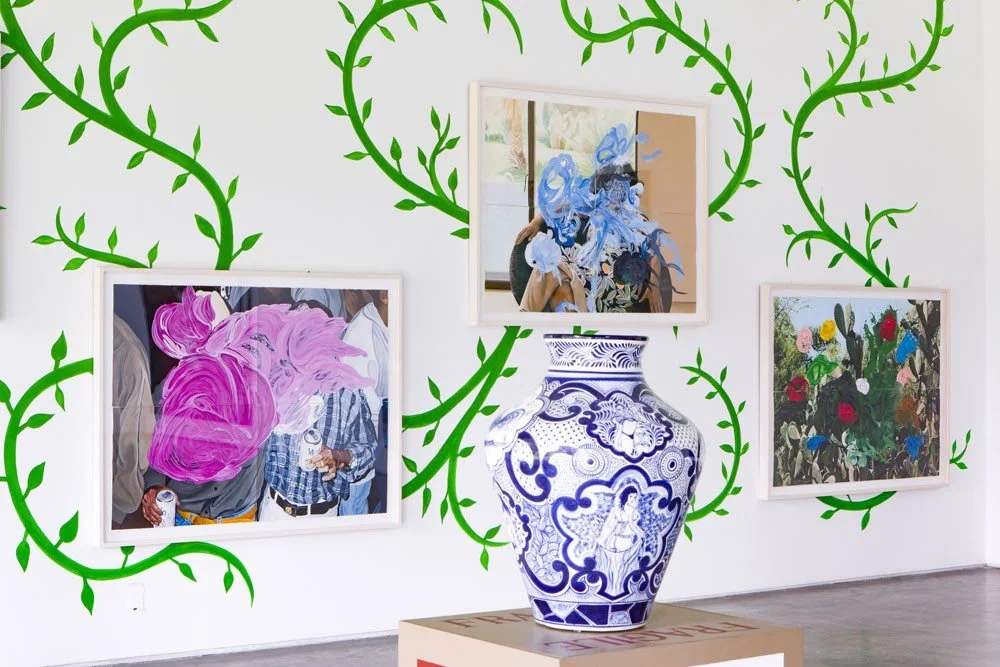
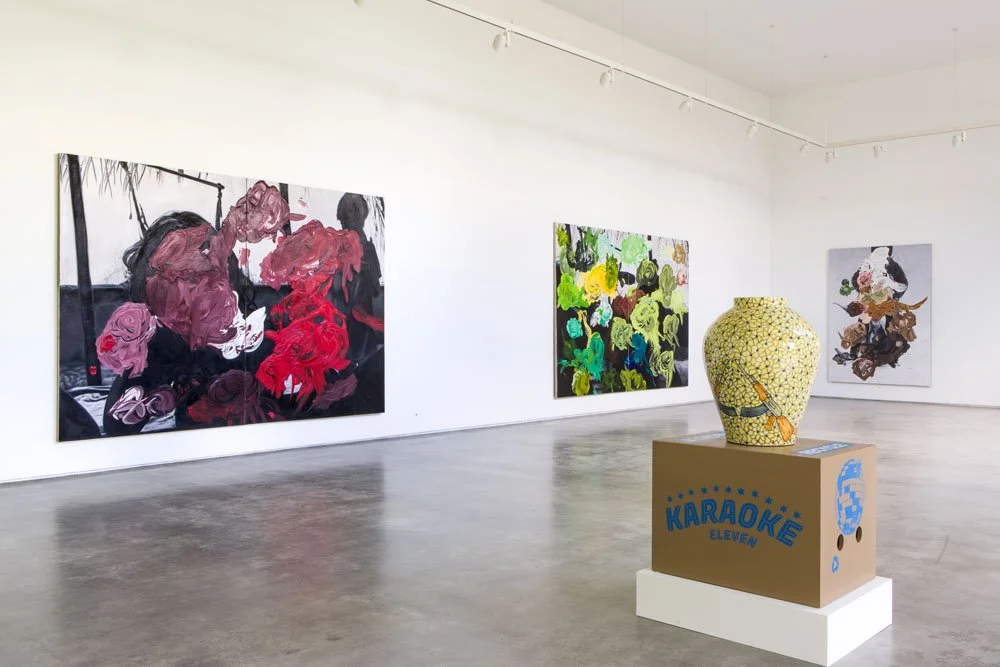
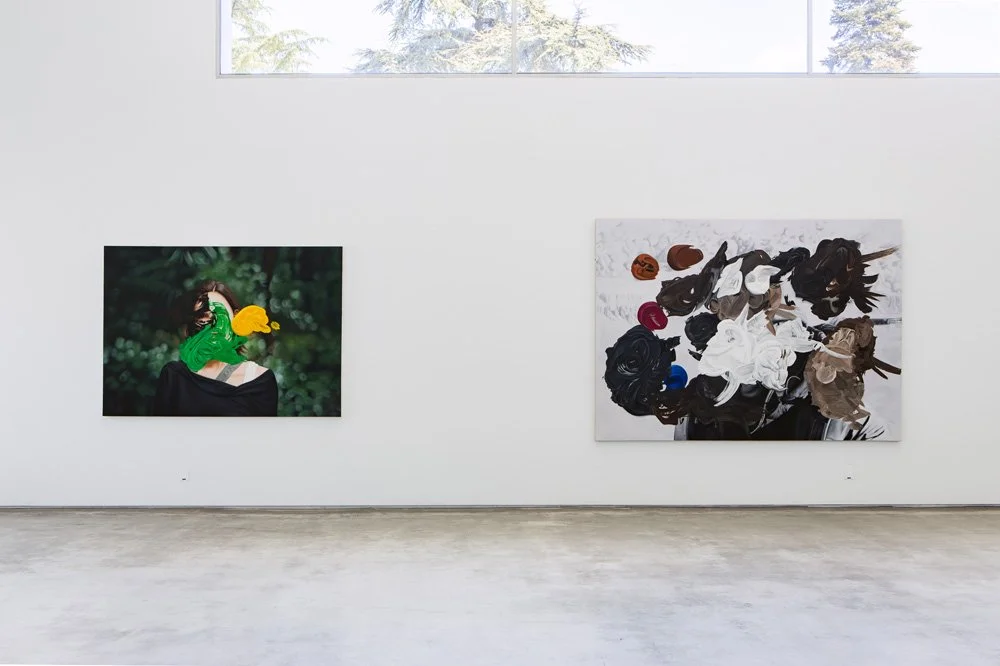
The works included in this exhibition are the latest compositions that emerge from this ongoing project. Increased in scale to resemble the portraits of the Old Masters or the monumental history paintings that hang in El Prado or the Louvre, the works are pictures of landscapes and people that are or were once part of the artist’s life, but here they are made abstract; inviting us to imagine the stories they want to tell.
Across the plane we see only circular color, spots that together give us a spectrum of greens familiar to Sarabia’s palette. Bursts of brown and yellow coalesce over areas of the picture that capture sand on the floor. The colors are gooey, visceral, and they drip across the surface as if a giant’s hand, holding a brush, had swooshed through it. Once you seize the urge to assemble an image, you begin to pay close attention to the formal qualities of these exercises, realizing they tell us more than what we perceive. As the artist attempts to find the perfect hue and stroke, the meaning-making potential of the process takes hold and we ponder what the formal qualities of the work stand in for, what they convey. It’s then that Unamuno’s intrahistoria takes a firm grip and we notice the lesser seen and known, the components that make the finished picture, or story possible. A second work in the show, perhaps a portrait, is layered with shades of red. We see more of the picture here—details of skin, patterns of textiles used to make a dress, even chunks of the furniture where these individuals are sitting.
A third work is largely covered with one huge white cloud-like form in its center gesturing that other colors will be introduced later and that this mass will be broken up into smaller ones through lines and movements. Presented together, the works provoke us to piece a narrative together but they deny us fully ever knowing the whole story. Instead, we are left at that precipice between what is told and untold and like in many of his other works, Sarabia invites us to makeup the in-between for ourselves— creating multiple meanings and storylines that inevitably project our own fears and desires onto the compositions. We become complicit with their making and are forced to complete them in our imagination.
The works are mysterious, seductive, and visually stunning but within Sarabia’s oeuvre they are more than just paintings on a wall. They are perhaps his most vulnerable body of work to date, the most personal and intimate. They guide us through his thought process, take us into his studio, and unveil insights into how each of his other projects comes to life. The hundreds of hours spent on research trips, on having communal meals, on learning from elders about the lives of others—the small private gestures and encounters are here placed front and center through colors and shapes in an overwhelming way; giving prominence to Unamuno’s claims that it’s in these quotidian exchanges where worlds are really made.