El Toro Y Otros Relatos
Museo Universitario del Chopo. Mexico City, Mexico, 2019.
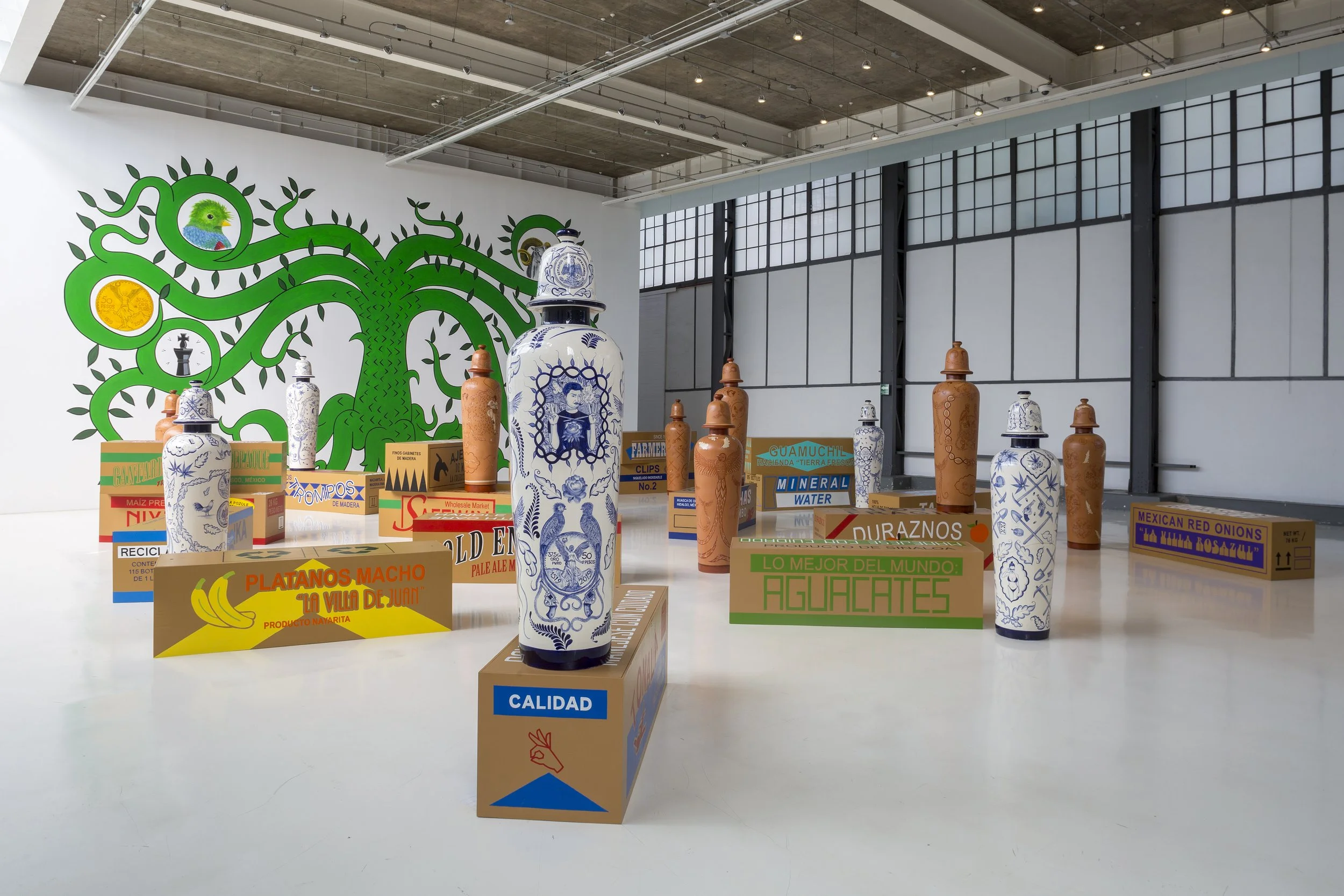
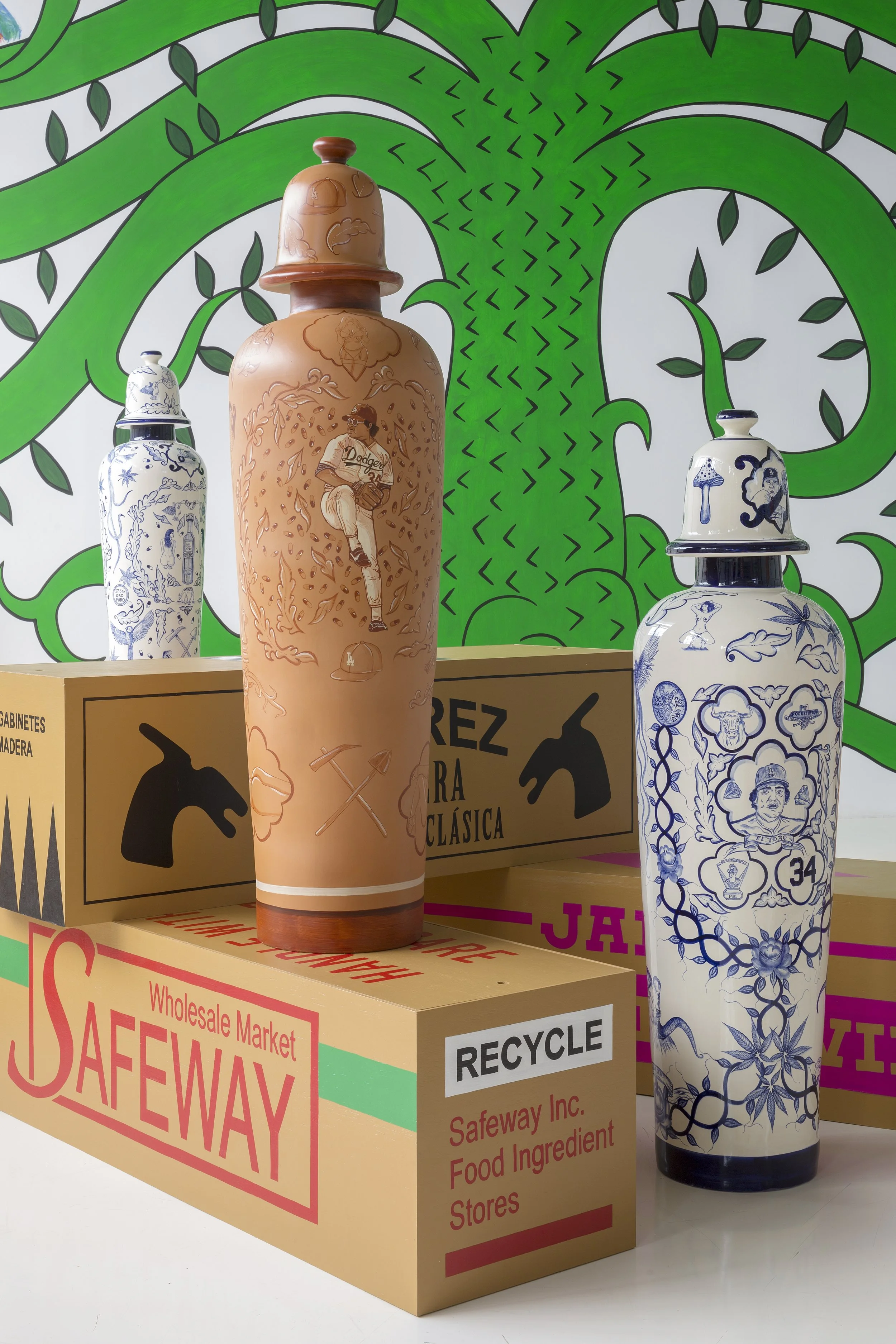
In El Toro y Otros Relatos, twenty years’ worth of searches and discoveries—both intentional and accidental—come together. Through ceramic tibores, a technique recurrent in his practice, Sarabia guides us through the themes that return again and again in his work, which are also the story of his life. The search is the method; re-signification is the outcome.
Sarabia says he is lucky—that stories come to him the way they do to Rulfo’s characters. He follows clues until he finds something (almost never what he expected) and then holds on to it. These discoveries often arrive unstructured, vague, without grounding or form—difficult. He works with them using different strategies: sometimes he lets them mature and constructs a parallel epic, until one day, without much calculation, he narrates the story of the discovery through a new object. One example is a deceptively simple piece of talavera—like the ones in this gallery—bearing images of a parrot, a goat, and a rooster: a brief history of drugs, pieced together over time during various trips to the mountains of Sinaloa while searching for something else entirely. In other cases, Sarabia finds a specific visual language for the story: naturalistic, declarative paintings; murals where the same symbolic animals appear, adorned with swords, rifles, marijuana leaves; and even himself, as a character inseparable from the discovery. A symbolic narrative.
His grandfather was a treasure hunter—one treasure in particular. Sarabia says his grandfather knew a great deal about it: for instance, he could describe the faces of the coins he believed he would one day find in a chest buried in the Sinaloa desert. When his grandfather died, Sarabia did not inherit the treasure, but rather the tradition of searching. As part of the artistic act, he visited the chapel of Jesús Malverde in Culiacán to ask for help in locating his grandfather’s gold. The treasure never appeared—or has not yet—but its place is not empty. That gold lives within the artist’s narrative work, and its branching paths have led him to new discoveries.
This exhibition is not a classic retrospective—it does not bring together works from every period—yet it highlights key threads of his life. Works arranged like labyrinths or corridors offer glimpses of different episodes: part invitation to walk through a life, part attempt to represent it.
Luisa Reyes Retana